12 hr
Great Zimbabwe Ruins Full-Day Tour from Harare
Explore Southern Africa's most significant ancient stone city on a guided journey through UNESCO-listed ruins
Reserve
Hand-picked by our editors — only the best 5 experiences from 12 reviewed.
Verified partners for every tour, free cancellation where available, and instant confirmation on every booking.
12 hr
Explore Southern Africa's most significant ancient stone city on a guided journey through UNESCO-listed ruins
Reserve
7 hr
Seven-hour guided exploration of Zimbabwe's capital, from ancient rock formations to vibrant townships
Reserve
5 hr
Explore Zimbabwe's capital through its historic sites, local flavors, and geological wonders
ReservePrices from verified partners. Availability updates in real time at checkout. Free cancellation policies apply where shown.
The landmarks, rooms, and views travelers on this tour remember — all visible on a single visit.
The oldest section of the site, built high on a granite hill overlooking the valley.
Great Zimbabwe offers a vast, monumental experience, while Khami provides a more intimate look at post-Great Zimbabwe architectural evolution, making them complementary UNESCO heritage sites.
| Feature | Top pick Great Zimbabwe | Khami Ruins |
|---|---|---|
Scale |
Extensive stone complex | Compact tiered platforms |
Construction Era |
11th–15th Century | 15th–17th Century |
Visitor Facilities |
Museum and site guides | Visitor center and trails |
Accessibility from Harare |
4-5 hour drive | 6-7 hour drive |
Primary Appeal |
Expansive dry stone walls | Intricate terraced masonry |
| See tickets → |
Verdict: Choose Great Zimbabwe from Harare tours if you prioritize grandeur and scale, or opt for the Khami Ruins if you prefer a quieter location with distinct, detailed masonry styles often included in comprehensive Zimbabwe landmarks itineraries when securing great zimbabwe from harare tickets for a broader regional tour.
Choose your ticket, select your date, and reserve in under two minutes. Secure checkout handled by our verified partner.
Instant confirmation by email, with a mobile voucher you can save offline. No printing, no queuing at a collection desk.
Arrive at the entrance, show your voucher on your phone, and walk in. Most tickets include priority or skip-the-line access.
Practical details for your visit straight from our verified partners — hours, access, rules, and how to get there.
Great Zimbabwe National Monument
Staff available for inquiries
Follow the A4 highway south from Harare to Masvingo.
Take a public bus from Harare to Masvingo city center.
Wear sturdy walking shoes with good grip for climbing the Hill Complex. Light, breathable clothing is recommended for the warm Zimbabwean climate.
Small backpacks are permitted, but visitors must carry their belongings at all times. Security personnel are stationed at the main monument gates.
Photography is permitted for personal use throughout the site. Commercial filming requires prior authorization from the museum office.
The site consists of rugged stone ruins and steep inclines. Wheelchair access is limited to the museum and the lower valley areas.
Mobile reception is intermittent near the Hill Complex. Ensure you have your transport details saved offline before arriving.
Children are welcome, though young visitors require supervision due to high walls and drop-offs. The paths are not suitable for strollers.
No food vendors operate within the monument walls. Visitors should bring snacks and bottled water from Masvingo.
Animals are not permitted inside the national monument grounds.
The monument is a UNESCO World Heritage site and strict conservation rules apply. Please remain on marked trails to protect the stonework.
Best time to go, insider tips, nearby landmarks, and the cancellation fine print — flip through to skim what matters to you.
How crowds, weather, and events shift across the year.
Cooler temperatures make climbing the ruins more comfortable for those on great zimbabwe from harare tours.
Hot and dry conditions; morning visits are essential to avoid midday heat during your great zimbabwe from harare tour.
Expect lush green landscapes but muddy paths; prepare for great zimbabwe from harare tickets to be used on clearer days.
Small details that turn a good visit into a great one.
Arriving at 08:00 helps you beat the heat of the day. This timing ensures you complete your great zimbabwe from harare visit before the gates close at 16:30.
Wear high-traction hiking boots. The granite paths are smooth and slippery in some sections.
Carry more water than you think you need. High altitudes and sun exposure increase dehydration risks.
Engage an official guide at the entrance. They offer insights often missed by visitors utilizing basic great zimbabwe from harare tickets.
The site has minimal shade. A wide-brimmed hat is crucial for those booking great zimbabwe from harare tours.
Non-bookable sights within a short walk — free to visit, easy to pair.
A large reservoir near the ruins offering scenic views. Great for relaxing after a tour.
Flexible, no hidden fees.
Entry fees are non-refundable once paid at the gate. The 15 USD conservation fee applies to all visitors regardless of travel arrangements.
Hand-picked options within walking distance — pick a district for vibe, or a specific hotel for convenience.
Located near the monument entrance.
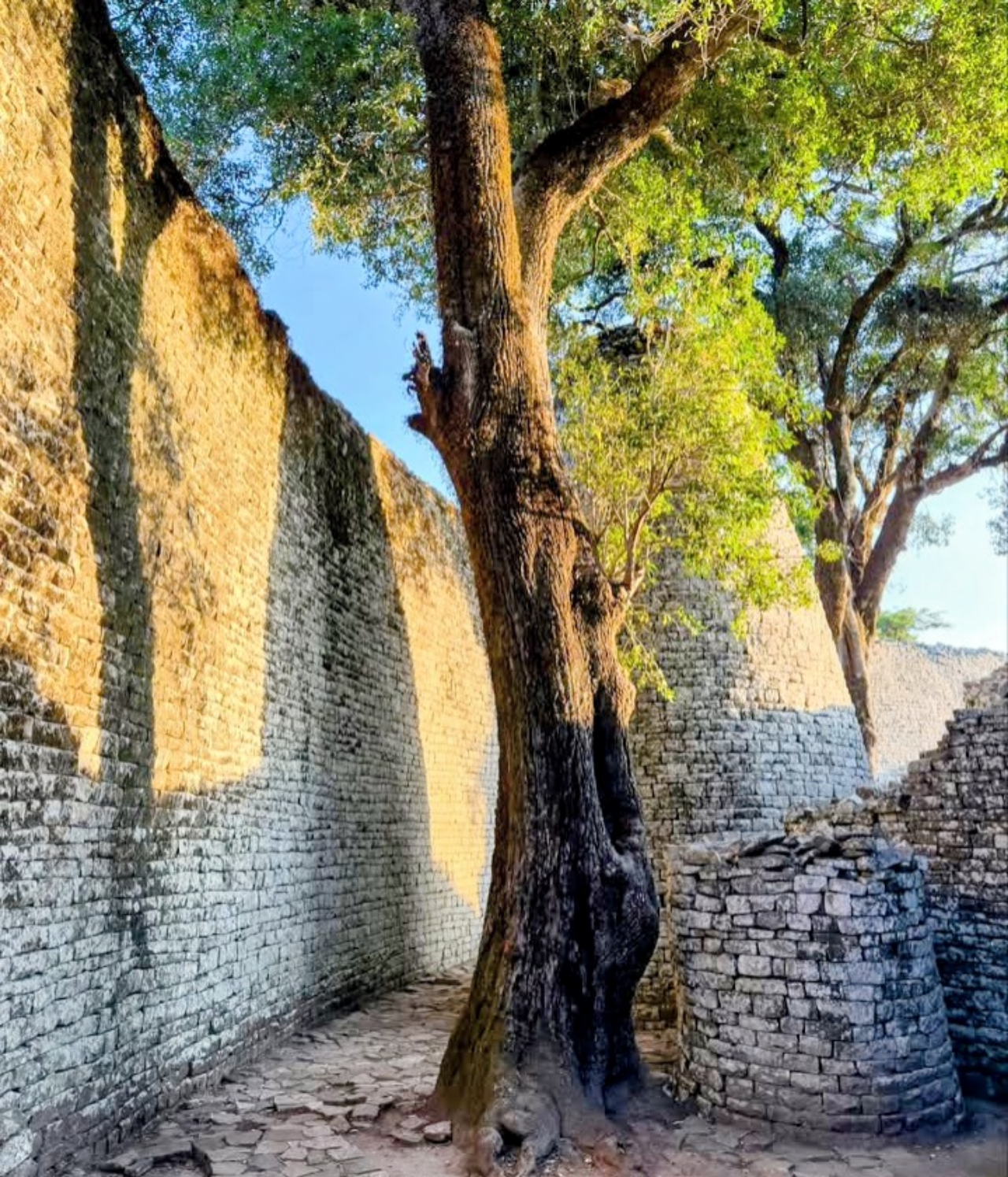
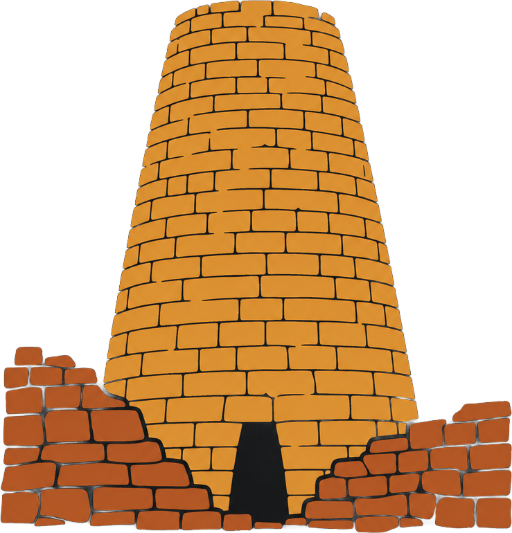
The Great Enclosure stands eleven metres tall and stretches 250 metres in circumference, its granite blocks laid without mortar in courses so precise that five centuries of rain have left the joints intact. Built between the 11th and 15th centuries by the ancestors of the Shona people, Great Zimbabwe was the capital of a trading empire that moved gold, ivory, and copper between the Zambezi plateau and the Indian Ocean ports of Kilwa and Sofala. At its height the city sheltered eighteen thousand people across a valley dotted with daga homesteads, soapstone bird sculptures mounted on monoliths, and terraced agricultural plots that climbed the granite hills. The name itself derives from dzimba-dze-mabwe, "houses of stone" in the Shona language, a reference to the dry-stone masonry that distinguishes the site from every other settlement in sub-Saharan Africa before the colonial period. Today Great Zimbabwe National Monument occupies 722 hectares of wooded savanna in Masvingo Province, and the ruins are divided into three distinct zones: the Hill Complex, the Valley Ruins, and the Great Enclosure. The Hill Complex clings to a granite outcrop forty metres above the valley floor and served as the royal residence and ritual centre; its passages are narrow, its sightlines controlled, and its eastern enclosure contains the original platform where six of the eight Zimbabwe Birds — now the national emblem — were recovered in the 1890s. The Great Enclosure below, with its famous conical tower and chevron-patterned frieze, is believed to have housed the king's extended family and may have functioned as an initiation school. The Valley Ruins, scattered between the two, were home to commoners and craftspeople, their walls lower and their plans less formal. Excavations have yielded Chinese celadon, Persian glass beads, and cowrie shells from the East African coast, evidence of the long-distance trade networks that underwrote the city's prosperity. Archaeologists now date the site's construction to a span of four hundred years, with the Great Enclosure completed in the 14th century during the kingdom's zenith. When the capital was abandoned around 1450, likely due to resource depletion and the shifting of trade routes northward, the stone walls remained, weathering into the landscape but never collapsing. The monument was inscribed as a UNESCO World Heritage Site in 1986, and ongoing conservation work by the National Museums and Monuments of Zimbabwe ensures that the masonry, vulnerable to root damage and erosive runoff, is stabilised without intrusive reconstruction. Great Zimbabwe from Harare is typically covered as a full-day excursion, the drive southward along the A4 highway passing through Masvingo town before reaching the monument entrance. Visitors walking the site today encounter the same granite boulders that the medieval builders incorporated into their walls, the same acacia shade, and the same long views across the valley that once framed a thriving city.
"The Great Enclosure stretches 250 metres in circumference, its granite blocks laid without mortar in courses so precise that five centuries of rain have left the joints intact."
A step-by-step walkthrough of the visit — what you'll see, how long each stage takes, and the details that matter.
You leave Harare before sunrise, the highway unwinding south through tobacco fields and granite kopjes, the five-hour drive broken by a stop in Masvingo for tea and a stretch. At the monument gate you pay the fifteen-dollar conservation fee and collect a site map that divides the ruins into three colour-coded zones. Your guide leads you first to the Hill Complex, and the climb begins immediately: a stone staircase wedged between boulders, then a narrow passage where the walls rise on either side and the granite is cool even in midday heat. You reach the Eastern Enclosure and pause at the platform where the soapstone birds once stood, the valley spreading below you in a patchwork of green and ochre. Descending, you cross the valley floor on a footpath shaded by msasa trees, and the Great Enclosure appears ahead, its outer wall taller than you expected, the chevron pattern running in a diagonal band just below the parapet. Inside, the conical tower stands nine metres high, solid and tapered, its purpose still debated. You circle the inner passages, running your hand along the dry-stone joints, then exit through the narrow western portal. The Valley Ruins are quieter, their walls waist-high and overgrown, and you walk among them slowly, noting the daga foundations and the scatter of pottery fragments in the grass. By mid-afternoon you are back at the visitor centre, the site map folded in your pocket, the long drive north ahead of you.
The site is open daily from 08:00–16:30. Visitors should plan their trip to fit these hours.
The conservation fee is 15 USD per person. This fee is mandatory for entry to the Great Zimbabwe National Monument.
Yes, the best arrival window is 08:00–15:00. This provides enough time to see the ruins before closing.
Yes, children are welcome. Please supervise them closely as the ruins have steep sections and uneven, historic stonework.
Food is not sold inside, so bring your own. Please take all trash with you to help maintain the Great Zimbabwe National Monument.
Tickets (conservation fees) are 15 USD per person and are non-refundable. Ensure your travel plans align with this policy.
Lake Mutirikwi is nearby and ideal for viewing after exploring the stone ruins. It is a popular spot for visitors in the area.
Accessibility is difficult due to the nature of the ruins. Many areas require climbing steep stone steps and narrow, uneven paths.
Bring water, sunscreen, a hat, and sturdy shoes. These are essential for navigating the terrain of the Great Zimbabwe National Monument safely.